Nursing support around the clock
Skilled nurses monitor symptoms, administer medications, communicate with physicians, and keep families informed 24 hours a day.

The Hay-Madeira and Harper Inpatient Units provide short-term, round-the-clock pain and symptom management while keeping family close.
Hospice care
Hospice usually comes to the patient’s home. Sometimes pain, breathing distress, agitation, nausea, seizures, medication needs, or another acute symptom becomes too difficult to manage safely in that setting. General inpatient hospice care provides close nursing observation and rapid treatment changes until symptoms are stabilized.
The inpatient unit is not a long-term residence or nursing home. The goal is comfort, clarity, and—when possible—a safe transition back to the patient’s preferred setting with hospice support continuing.
Skilled nurses monitor symptoms, administer medications, communicate with physicians, and keep families informed 24 hours a day.
Loved ones may visit at any hour, stay overnight on sleeper sofas, spend time on private patios, and ask questions as needs change.
Private rooms, shared family spaces, natural light, and an unhurried hospice approach help the unit feel different from an acute hospital floor.
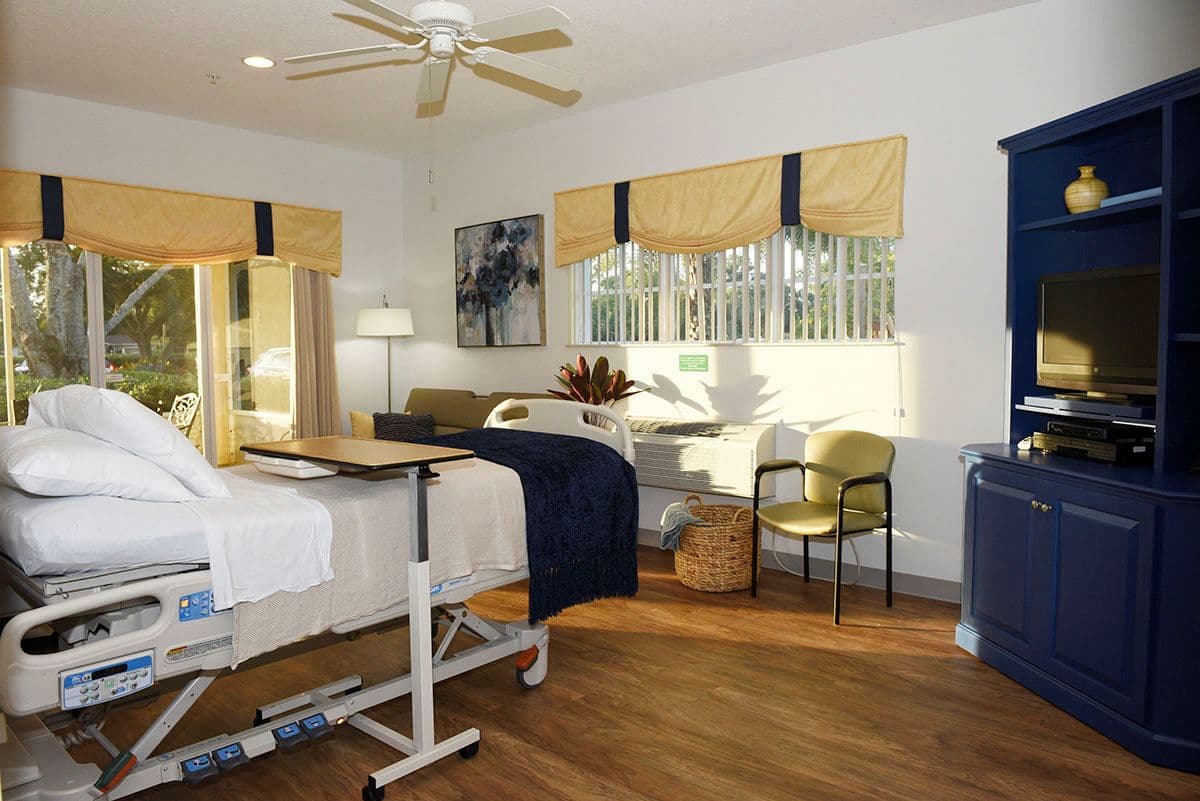
Where care happens
Both Martin County units are located at 1000 Ruhnke Street in Stuart and share a commitment to skilled symptom management, privacy, open visiting, and whole-family support.
Opened in 1996, Hay-Madeira provides private patient rooms, patios, family space, 24/7 nursing, physician involvement, and support from the full interdisciplinary team.
Opened in 1992, Harper offers the same family-centered hospice approach on the Stuart campus, with round-the-clock clinical support for acute symptom needs.
Family and friends are welcome 24/7 and should check in at the nursing station. Children and family pets may visit with appropriate coordination.
Four levels of care
The hospice team reviews each crisis individually. Admission depends on clinical need, the plan of care, and whether symptoms can be managed safely in the patient’s current setting.
Pain remains severe despite appropriate changes at home.
The team reassesses frequently and plans the next setting as comfort improves.Severe shortness of breath or complex medication needs require intensive management.
Transfer decisions are made with the patient, family, and hospice team.Rapidly changing symptoms are causing distress or safety concerns.
Families receive regular explanation and support throughout the stay.An eligible short stay may give the primary caregiver time to rest.
The hospice team explains availability, timing, and benefit requirements before arranging a stay.The inpatient team combines around-the-clock nursing with physician oversight, personal care, medication expertise, counseling, spiritual support, volunteer companionship, and thoughtful discharge planning.
Oversee the plan of care, manage complex symptoms, and coordinate with the patient’s attending physician and other clinicians.
Assess changes, manage medications, teach caregivers, provide personal care, and remain available around the clock for urgent concerns.
Help with care planning, emotional stress, family conversations, community resources, benefits, and practical end-of-life concerns.
Offer inclusive, patient-led support for meaning, faith, reconciliation, ritual, or quiet presence, based entirely on the person’s wishes.
Support the care plan with medication review, nutrition guidance, music therapy, and other clinically appropriate comfort services.
Bring companionship, caregiver relief, veteran-to-veteran connection, pet support, and a caring community presence.
Related care and support
Patients and families can ask about pet visits, spiritual care, music therapy, legacy work, pediatric support, and grief services during and after an inpatient stay.
Specialized pediatric hospice and palliative support for children and young adults, with care that surrounds the whole family.
Explore pediatric careLevel 5 We Honor Veterans support, veteran-to-veteran companionship, recognition, and care shaped around military experience.
Explore veterans careMusic therapy, massage and aromatherapy, virtual reality experiences, Treasured Pets, and legacy projects support comfort and connection.
Explore complementary therapiesIndividual counseling, groups, youth programs, and community resources are available before and after a loss.
Explore grief supportStarting care
Current patients should call the 24/7 line when symptoms change. New patients and referring professionals can contact admissions for a clinical review and guidance.
Describe the symptoms, recent medication changes, and what is no longer working in the current setting.
The team assesses whether an inpatient stay, continuous home care, medication adjustment, respite, or another intervention is appropriate.
When inpatient care is indicated and available, the team explains transportation, medications, check-in, coverage, and what family should bring.
As symptoms stabilize, the team coordinates a return home or transition to another appropriate setting with hospice care continuing.
A care specialist is available 24 hours a day to listen, answer questions, and help your family understand the next step.