
Easing anxiety
Gentle singing or instrumental music can create a calm, reassuring environment for rest, reflection, or quiet time together.
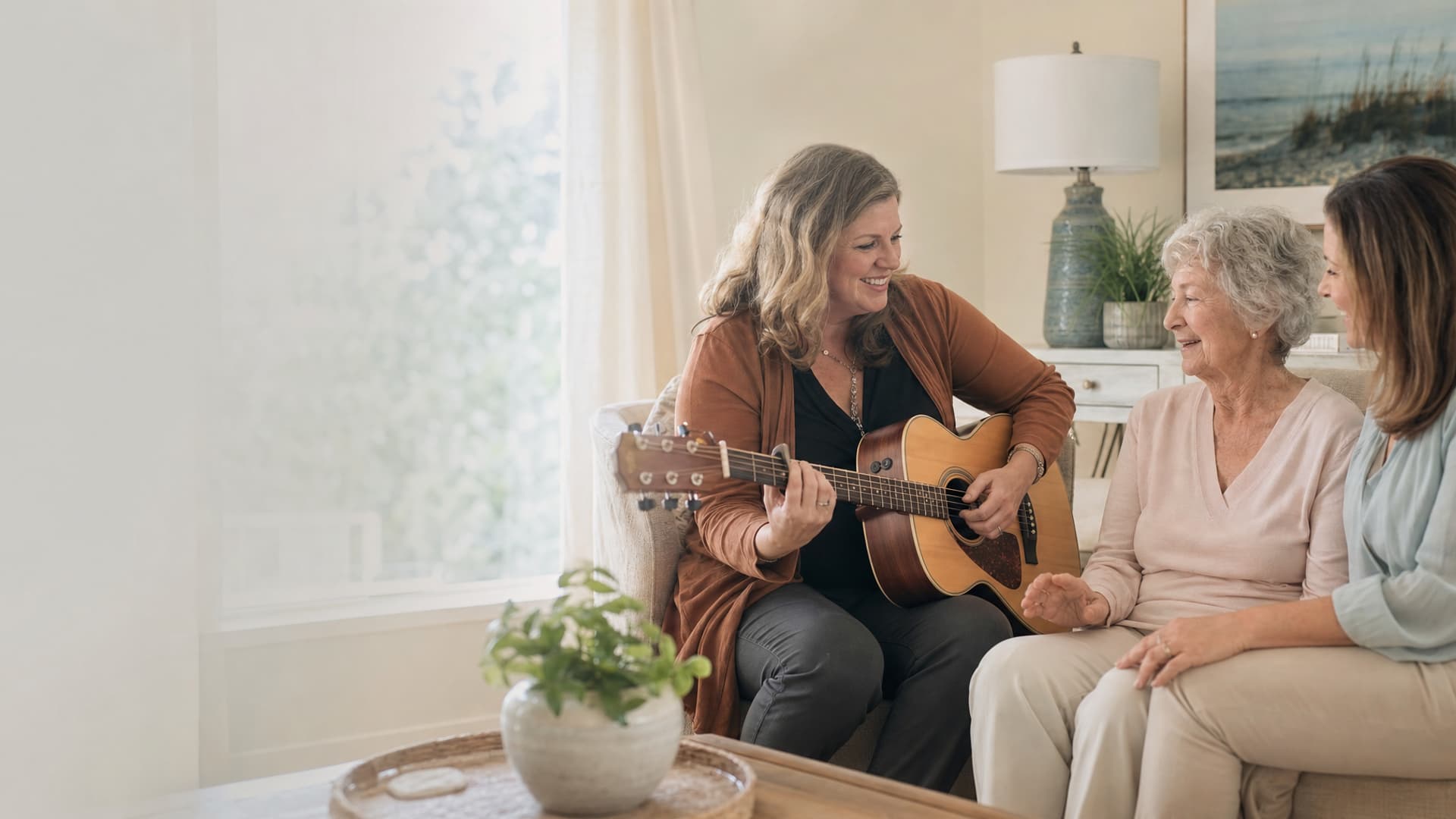
Board-certified music therapists use music intentionally to ease anxiety, calm restlessness, support pain management, and create meaningful moments of connection for patients and families.
Music therapy is not simply listening to a favorite song. It is a clinical, evidence-informed service provided by a board-certified music therapist and thoughtfully shaped around each patient’s needs, preferences, energy, and goals.
Through familiar melodies, live music, conversation, and quiet presence, music therapy can bring comfort, encourage expression, and create moments of connection when they are needed most.
A patient does not need to sing, play an instrument, or even be fully awake to benefit from music therapy. Some patients actively participate, while others simply listen, rest, or enjoy the comforting presence of music.
The therapist meets each person exactly where they are that day.
Each session is personalized around the patient’s goals, energy, musical preferences, and response.
Gentle singing or instrumental music can create a calm, reassuring environment for rest, reflection, or quiet time together.
Carefully paced music, rhythm, breathing, and guided relaxation may help patients settle and cope with feelings of stress, agitation, or discomfort.
Music can provide a comforting point of focus, encourage relaxation, and help reduce the emotional distress that may accompany physical pain.
The therapist may use slow, steady music and guided breathing to support relaxation and create a greater sense of peace.
Familiar songs can bring meaningful memories to the surface, inviting stories, recognition, conversation, or singing together.
When speaking becomes difficult, music may offer another way to communicate feelings, share love, or simply be present with one another.
Where care happens
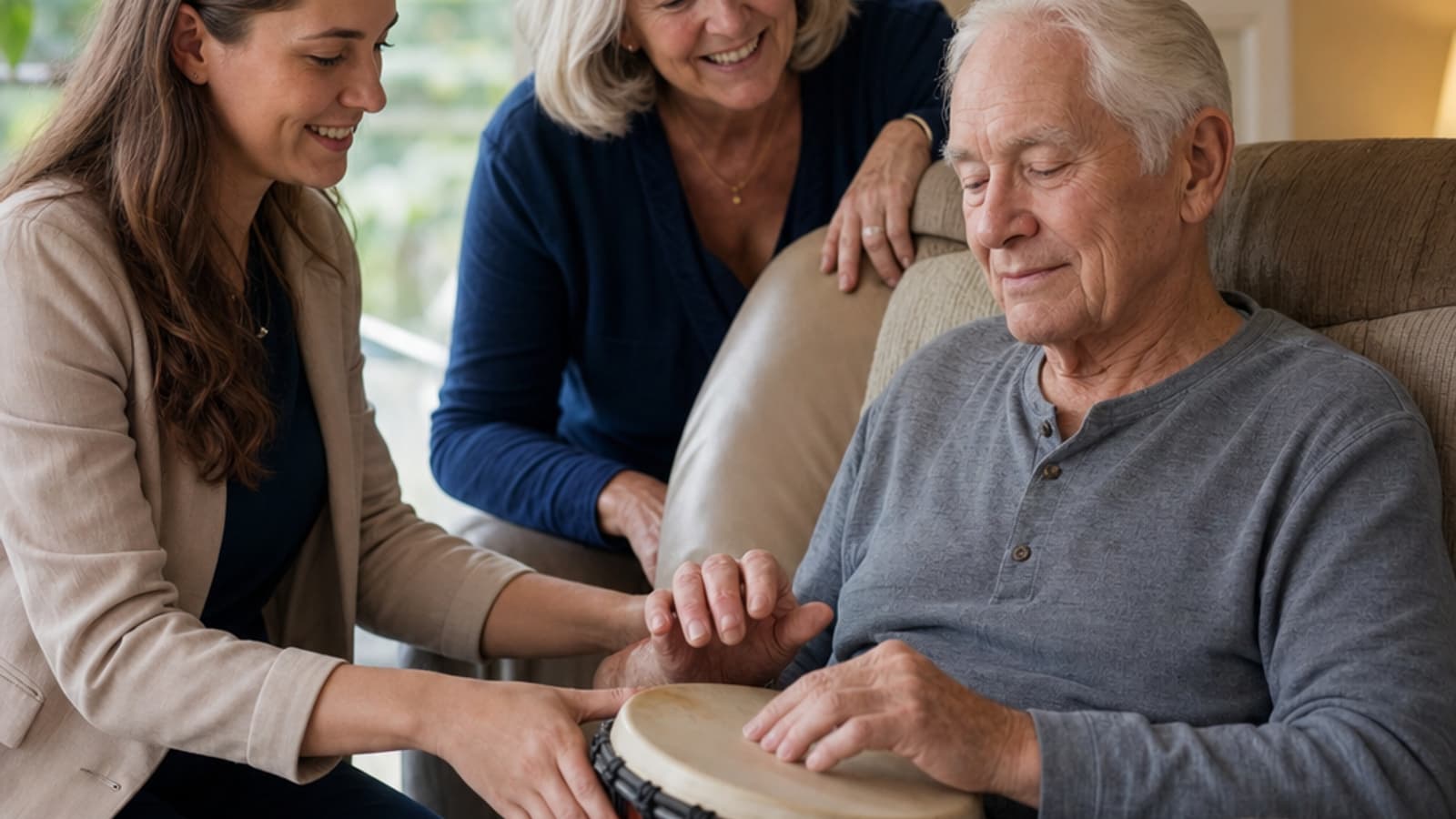
Music therapy is woven into the care provided by the entire hospice team and may be offered when a hospice nurse identifies a need and determines it would support the patient’s plan of care. Sessions may take place wherever the patient is receiving care and are adapted to the environment, the patient’s condition, and the needs of the family.
Music therapy can bring calm, comfort, and connection into the familiar surroundings of a patient’s home.
Sessions can be personalized around the patient’s favorite artists, songs, traditions, life experiences, and important memories.
Music may be used at the bedside to support comfort, relaxation, symptom management, and meaningful time with loved ones.
Practical answers about participation, comfort, availability, and what families can expect.
When music has been part of someone’s life, it can continue to bring comfort, awaken memories, and create meaningful moments of connection. Ask your care team whether music therapy could be a valuable addition to your loved one’s plan of care.