Always optional
The patient decides whether to participate and may stop at any point. Declining a session never affects the care they receive.
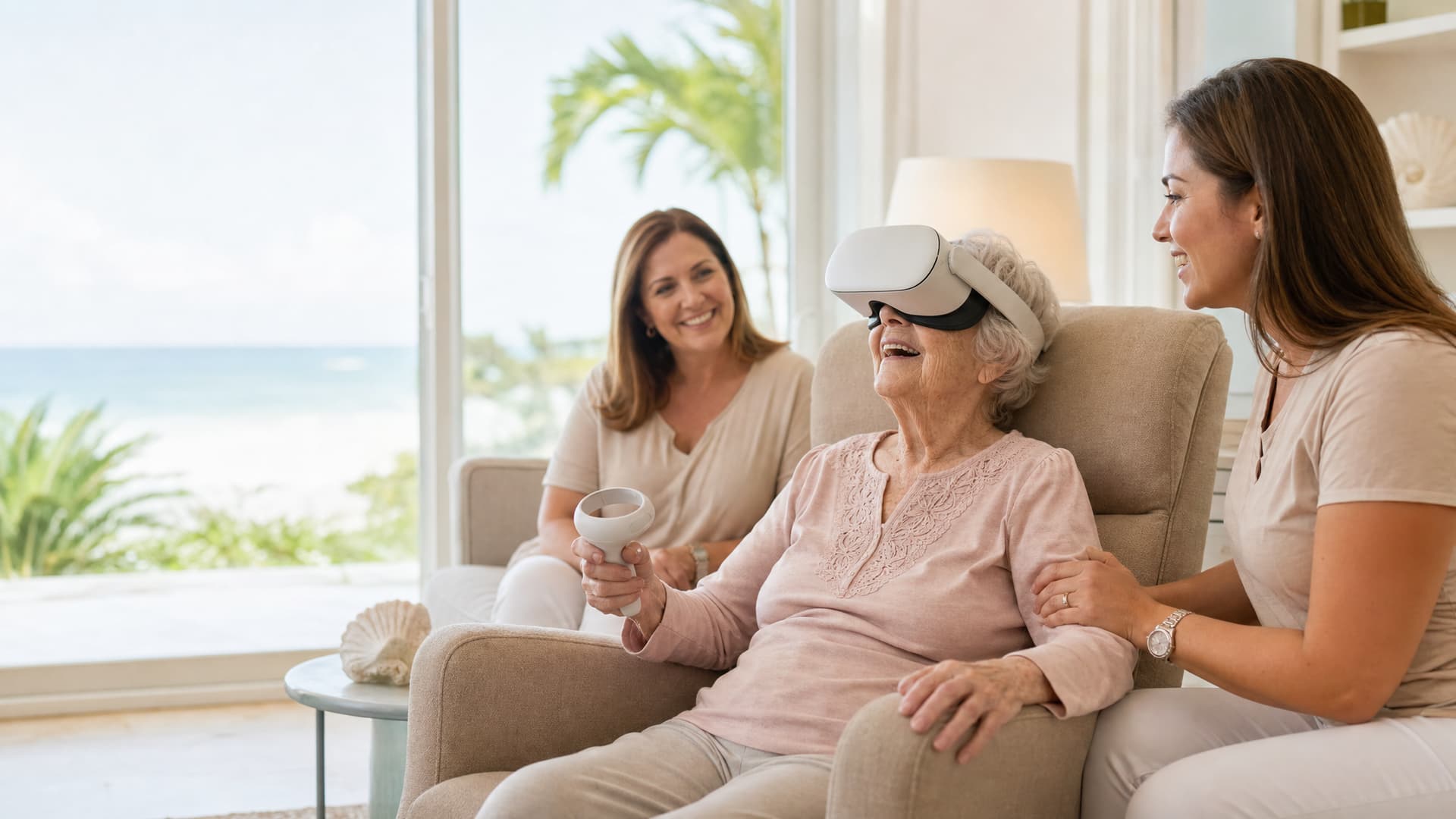
Supervised virtual reality experiences can help patients visit calming landscapes, return to meaningful places, and share memories with the people they love.
Virtual reality uses a lightweight headset to surround a person with images and sound from a selected place or experience. For someone whose illness makes travel difficult, that may mean sitting beside the ocean, walking through a familiar city, or simply spending a few quiet minutes in a peaceful setting.
At Treasure Coast Hospice, virtual reality is an optional complement to the patient’s plan of care. It does not replace medications, clinical care, or human presence. A trained team member helps choose an appropriate experience, remains nearby, and can pause or end the session at any time.
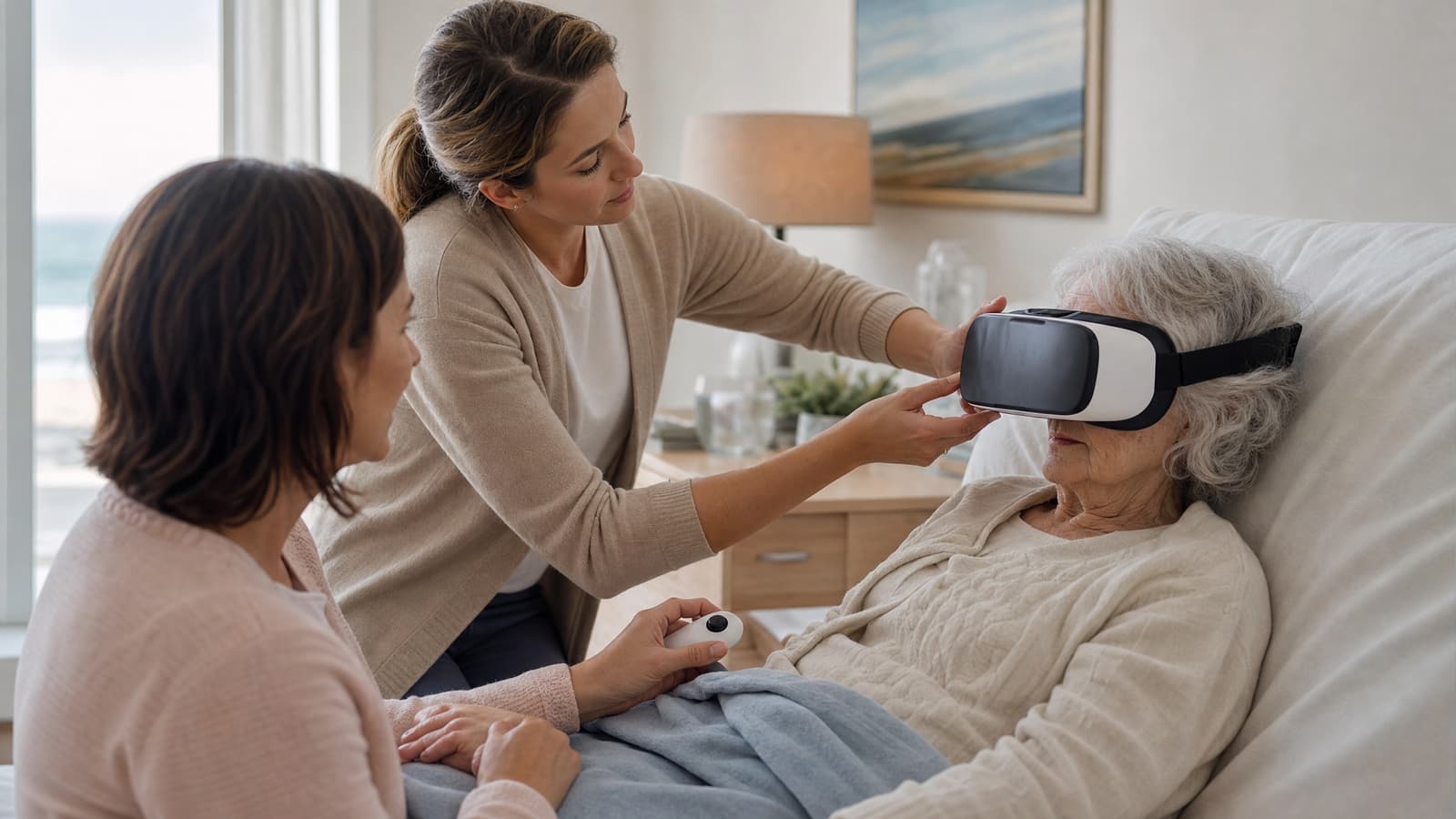
The patient decides whether to participate and may stop at any point. Declining a session never affects the care they receive.
The care team considers symptoms, vision, balance, cognition, motion sensitivity, and personal preferences before offering an experience.
Sessions can be kept short and gentle. A trained person stays present to help with the headset and watch for any sign of discomfort.
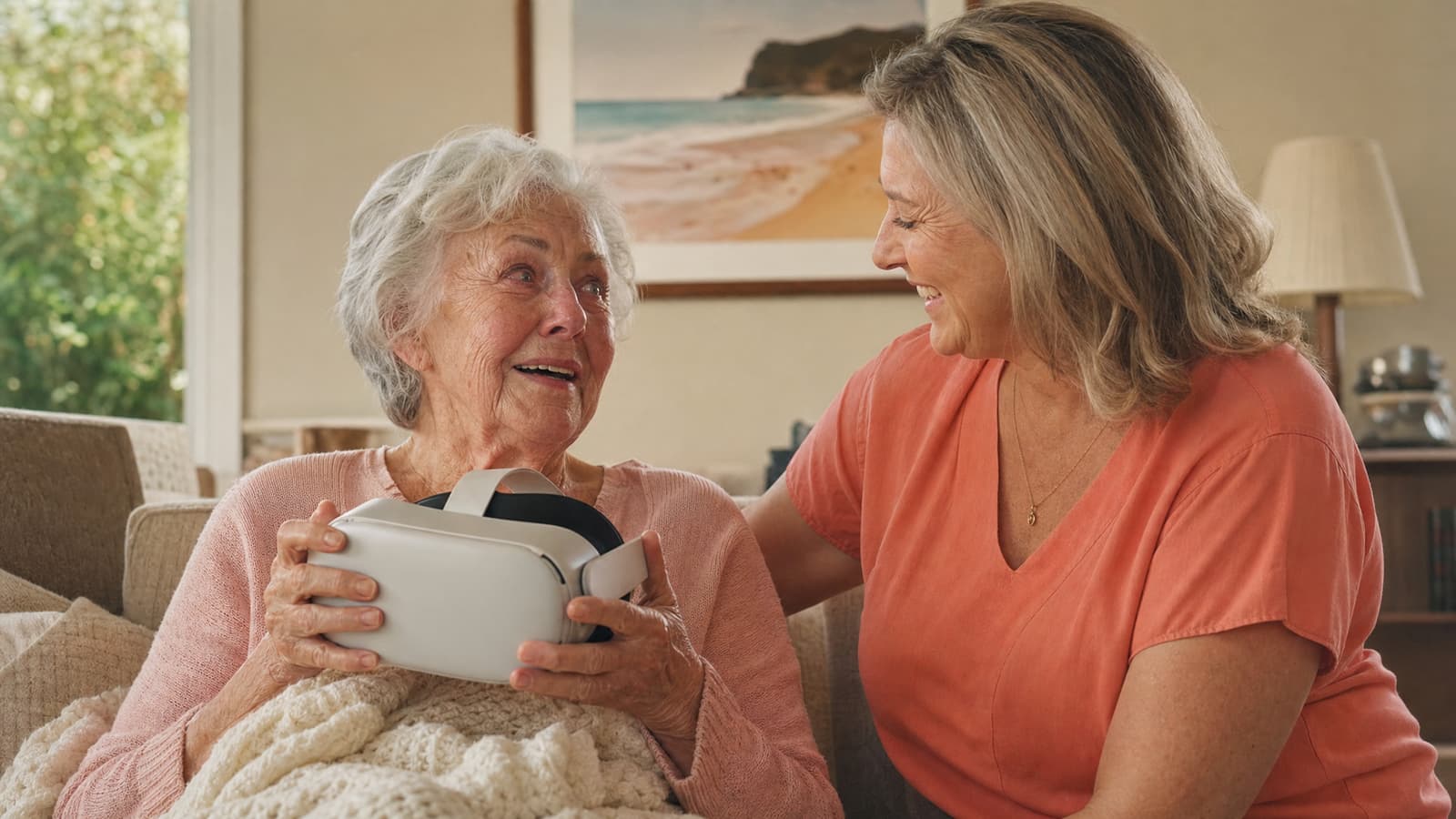
There is no single destination or goal. The most meaningful experience is one that reflects what brings the patient ease, interest, or connection that day.
A virtual journey may offer calm, invite memories, or create a shared moment with family—all without leaving the patient’s care setting.
A quiet beach, forest path, garden, or underwater scene may offer a gentle change of focus and a few restorative moments.
Patients may explore a favorite city, a place connected to family history, or a destination they have always hoped to see.
Familiar sights can invite stories about work, travel, traditions, and the people who shaped a life, without requiring the patient to tell more than they wish.
Every session is guided by the patient’s comfort. The experience can be adapted, shortened, or skipped based on how the person feels that day.
A patient or family member can ask whether virtual reality is available and appropriate as part of the patient’s complementary care.
The patient’s interests, memories, current energy, and comfort guide the choice of destination and the length of the session.
A trained team member explains the headset, helps the patient get comfortable, and stays close throughout the experience.
The session ends whenever the patient is ready. Families may choose to talk about what they saw, follow a memory, or enjoy the moment quietly.
Your Treasure Coast Hospice care team can explain what is available, answer questions, and help decide whether a brief virtual reality experience fits the patient’s wishes and comfort.