
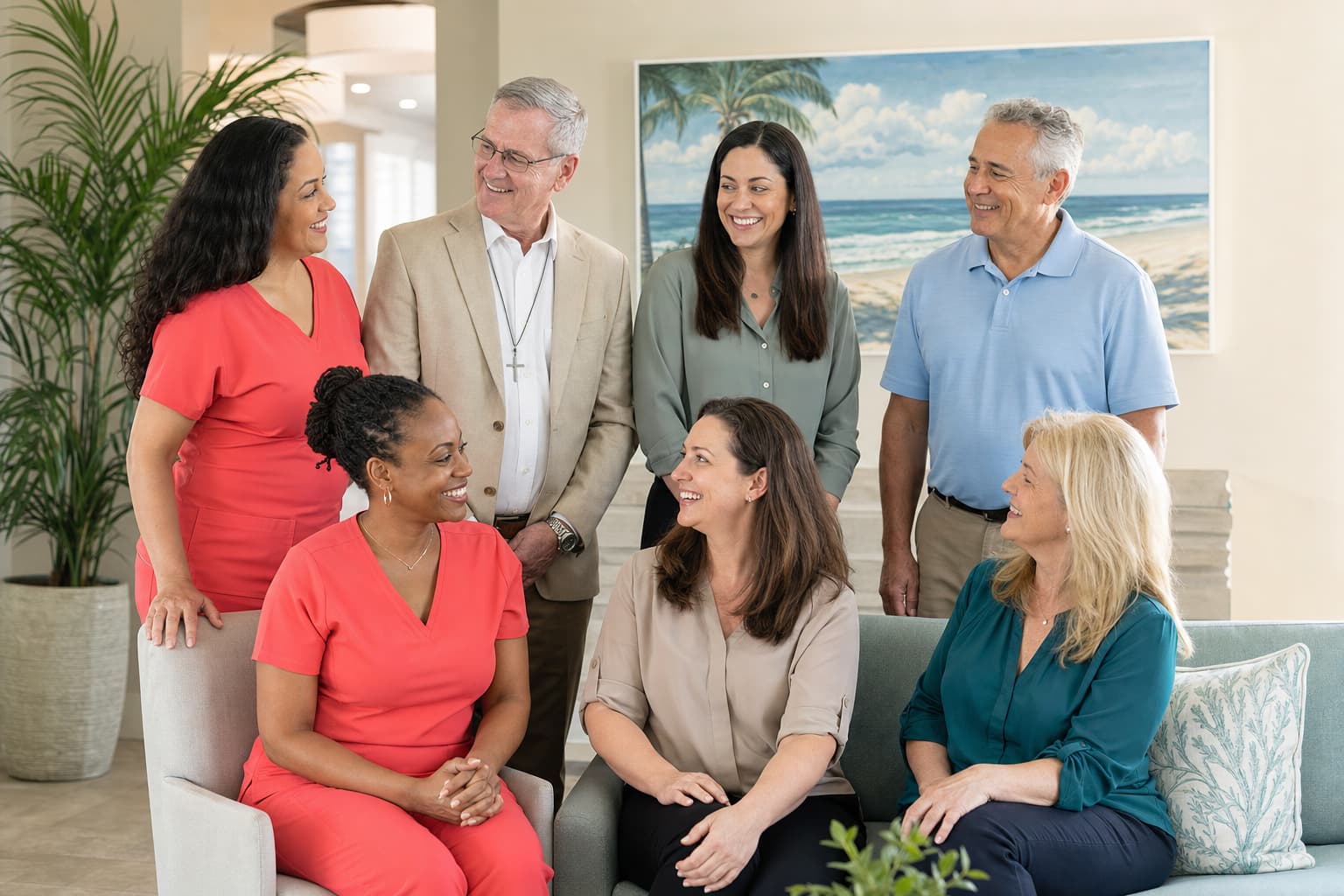
Inside Our Interdisciplinary Care Team
When a patient and family choose hospice care, they're not just gaining access to a nurse or a single caregiver — they're gaining an entire team built around them. At Treasure Coast Hospice, that team meets regularly to shape one shared plan of care, drawing on the expertise of nurses, chaplains, social workers, and aides working together rather than in separate silos.
Why One Team, Not Several
Serious illness touches every part of a person's life — physical, emotional, spiritual, and practical. A single discipline can't address all of that alone. That's the idea behind the interdisciplinary care model: instead of a nurse managing symptoms in isolation, or a social worker handling paperwork on a separate track, the whole team comes together regularly to talk through what's really happening with each patient and family, and to adjust the plan of care accordingly.
This isn't just good practice — it's central to what makes hospice care different from other kinds of medical care. The goal isn't only to manage symptoms. It's to support the whole person and the people who love them.
Who's on the Team
Physicians provide medical oversight for each patient's plan of care, guiding treatment decisions and working closely with the rest of the team to ensure care stays aligned with the patient's goals and comfort.
Nurses manage pain and symptoms, monitor changes in condition, and serve as the clinical backbone of day-to-day care. They're often the first to notice when something in the plan needs to shift.
Chaplains offer spiritual support — not tied to any one faith tradition, but responsive to whatever matters most to the patient and family, whether that's a specific religious practice, a search for meaning, or simply someone to sit with them in a hard moment.
Social workers help families navigate the practical and emotional weight of a serious diagnosis: care planning, community resources, family dynamics, and grief support that often begins well before a loss occurs.
CNAs provide hands-on, personal care — bathing, grooming, and daily comfort — and in doing so, often build some of the closest relationships with patients and families.
Each of these team members brings a different lens. Together, they see the whole picture.
How the Team Works Together
Regular team meetings are where this collaboration actually happens. Nurses report on clinical changes. Social workers share what a family is struggling with at home. Chaplains note where a patient's spiritual needs may be shifting. Aides, who often spend the most one-on-one time with patients, offer observations that don't always come up anywhere else.
From these conversations, one shared plan of care emerges — not four separate plans loosely coordinated, but a single approach that every team member understands and contributes to. When a patient's needs change, the whole team adjusts together.
What This Means for Patients and Families
For the families we serve, this model means they're never facing one problem with only one kind of help. A conversation about pain management can lead naturally into a conversation about family stress, or a spiritual question, or a practical need at home — because the team member in front of them is connected to everyone else supporting that patient.
It also means continuity. Even as needs evolve — sometimes quickly — the team already knows the full picture, because they've been building that shared plan together all along.
This is what interdisciplinary care looks like in practice: not a checklist of services, but a team of people who show up, listen, and work together around each patient and family they serve.